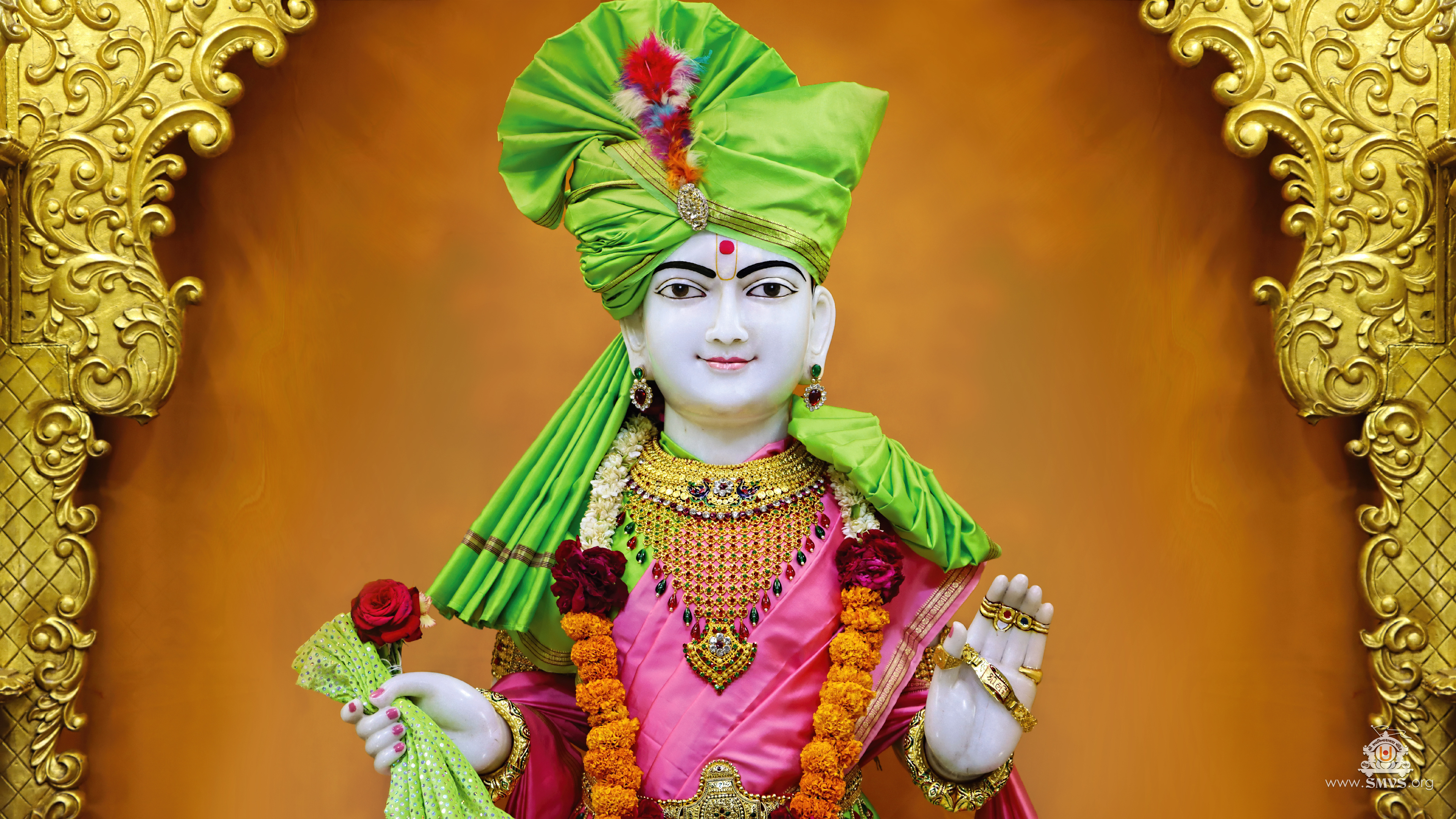



બાપાશ્રીની વાતોનો મહિમા
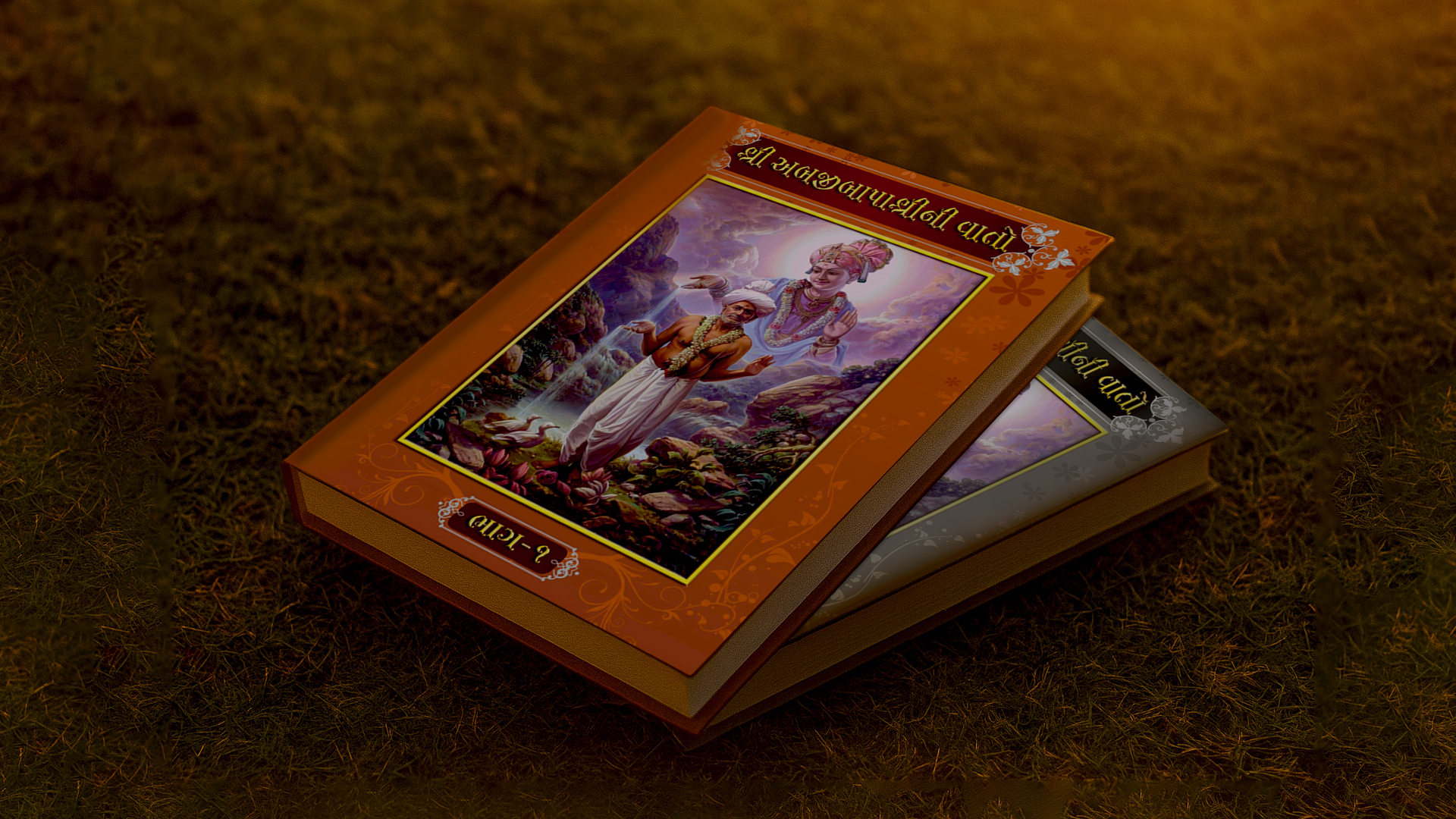
Karan Satsang is all about connecting with the Murti. As Satsangis, our goal is simple: to attain the bliss of God. And there’s a clear path to reach this goal—two goals and one important role.
The Two Goals:
- To understand the true form of Shriji Maharaj.
- To connect with the true form of Shriji Maharaj.
In order to accomplish these two goals, we must take on one essential role:
The Role:
Be a ‘Purushottamrup’.
That’s why it’s said:
"Purushottam pamava Purushottamrup banavu,
enu praman Shrimukh vani ekavan ganavu."
“To attain God (Purushottam), one must attain God’s like form (become Purushottamrup). The proof of this is found in the Vachnamrut, cited in the fifty-first vachanamrut.”
“Just as only a diamond can cut another diamond, in the same way, the understanding of God’s form comes only through God, and the darshan of God can only be had through God.”
Thus, to make us Purushottamrup, Maharaj’s sankalp has manifested as the divine form in accordance to propagate Maharaj’s resolve.
"Potana gharani je vato, teni kon batave jukti,
pote kan potana sankalp, kharu rahasya to jane;
tene je je jiv male te, maha sukhda to mane."
To fulfill the incomplete wishes of Shriji Maharaj, Jivanpran Abjibapashri manifested and, through his immense grace, focused entirely on guiding souls to become worthy of Murti Sukh—the bliss of the divine form of God. That’s why it’s said, “To fully immerse in the Murti, read Bapashri’s Vato.”
What does Bapashri’s Vato contain? Bapashri has laid out the royal path that leads directly to the Murti. If Bapashri hadn’t come to this world, we wouldn’t have truly recognized the supreme Lord Swaminarayan.
The Vato was created with the sole purpose of revealing Shriji Maharaj’s divine form. Naturally, one can only give what they possess, which is why Bapashri would often declare, “We deal in only one thing—the Murti.”
Shreeji sankalp to ame avya, bheli Shreejini murti lavya;
Jene joie te avjo leva, ame to avya murti deva.
Amare to ek j vyapar, devi murti e j karar;
Koi lyo koi lyo em kahta, keval krupae murti deta.
And whoever came into his presence, Bapashri would bless them with the divine Murti of Maharaj.
After hearing Bapashri’s Vato, sants, devotees, and spiritual seekers from all over the world would rush to be near him, just like rivers eagerly flow toward the ocean to unite with it. They would come running to experience Bapashri’s grace and spiritual company.
"Shrijini ichchha thaki j pragatya, Bapa daya dil dhari,
Vachanamrut sugranth keri vhaale, rahasyarth tika kari;
Murtima rasbas janone karva, be bhag vaat thai,
Purushottam Lilamrut granth karyo, Varniji dvare lai..."
"Bapashrini vato mune lage bahu pyari,
Murtina sukhma chhe ramadnari."
After reading the experiences of great muktos and seekers, it becomes evident that the more one reads Bapashri’s Vato, the more new and profound knowledge arises from within. Just as reading the Vachanamrut signifies direct communion with Shriji Maharaj, reading Bapashri’s Vato signifies direct communion with Bapashri himself.
Bapashri’s Vato are not merely words being read—Bapashri speaks through them. He imparts wisdom and creates the experience of his spiritual presence. That’s why it’s said in the kirtan:
"Jyaare vato vanchay tyaare, Bapa bolanhar..."
Maharaj and Bapa are always ever-present. Therefore, Bapa speaks to us by observing our shortcomings and faults, and that is why when we read, Bapa speaks exactly according to our needs. That is why it feels new every time. Often, it may happen that we keep coming across the same message repeatedly. In such a case, we should understand that we have not yet started living according to that teaching or have not implemented it in our conduct, and thus, Bapashri emphasizes that point to make us firm in our resolve.
If we sit down to read, truly eagerness and in need, after praying to Shriji Maharaj and Bapa, Bapa will see our hunger and need, and convey messages exactly as per our yearning. For such zealous and earnest seekers, this book will be as soothing as a sweet well in a salty sea. And for those aspirants who, upon hearing that Lord Swaminarayan is supreme, and He made me his Mukta, residing within the divine form, develop a desire for contemplation, meditation, and realization—this book will fulfill the need for an experienced, true Guru."
What does Bapashri’s Vato contain?
In Bapashri’s Vato, there is nothing except the murti. Throughout his teachings, it’s murti... murti... murti—completely filled with the divine form.
When Bapashri’s Vato were being printed, they ran out of the type for the word murti. Across the two volumes, the word murti appears nearly 2,553 times.
The more we read Bapashri’s Vato, the more we deserve the bliss of the murti. Each teaching leads us directly to the murti, immersing us in the joy of the divine form. This is the lasting treasure, the true wealth he has given us. Whoever reads Bapa’s Vato with sincere longing and spiritual eagerness will truly begin to play in the joy of the murti. Nothing else will appeal to them besides the murti. After reading once, they will feel the urge to read it again and again... because Bapashri’s Vato are all about the murti, the murti, and only the murti.
And as it’s said, “Bapashri ni vaani te chhe murti sukh denaar...”
- Distinction Between Karya and Karan
Some individuals within the Swaminarayan tradition may not yet have a complete understanding of what “karan”—the cause—truly means. Because of this, they often confuse the karya—the means or medium—with the karan, and shape their spiritual practice around that misunderstanding. This leads them to become more attached to things like temples, sants, and rituals, which are important but are not the ultimate goal.
Bapa made this clear in the fourth Vato of the first part, saying:
“Maharaj and Muktas are the karan (the ultimate cause or source), while the temples, Acharya, sants, brahmacharis, and satsangis are all karya (the mediums to reach that cause).”
- The Concept of Anvay and Vyatirek (Immanent and Comprehensive Forms)
Bapa has often explained the concepts of anvay swarup and vyatirek swarup. While the Sampraday believes that Shriji Maharaj is supreme, many still don't fully grasp how He is supreme.
Only those who understand the distinct relationship within the channels of anvay (immanent) and vyatirek (Comprehensive) can recognize Shriji Maharaj as the Supreme Being in His true form. If you want to understand these deeper concepts of upasana and the distinction within the channels of anvay and vyatirek, you should read Bapashri’s Vato.
- The Clear Preference for Meditation
In the 167th Vato of the first part, Bapashri shares Maharaj’s clear preference:
“If you’re in this spiritual association but meditate without truly realizing the divine murti, you’ll end up disappointing both Maharaj and the Satpurush. But if you meditate with sincere commitment, within six months, you’ll experience the glowing presence of the murti and have a divine realization. Think about it—if you don’t feed your body for two months, it won’t survive. In the same way, if you care for the murti with the same level of dedication, you’ll directly experience it.”
When we connect with the Motapurush—a realized spiritual guide—they help us rise above body-consciousness, even while we’re still living in the body. Through that connection, spiritual realization becomes truly possible. That’s why it’s said:
"Mota sange jivne jodi, dehadik sarvethi todi,
Dhyan ni chavi melavvane, vancho Bapashrini vato."
- The Practice of the Anadimukta
While explaining the Purushottamrup (the form of God), Bapashri also revealed the unique practice (latak) of the Anadimukta. He taught how to master meditation in the 48th Vato of the second part, saying: “The one who moves, walks, and performs actions is Maharaj. As for me, I remain in the murti, enjoying its bliss—this is the practice he taught.”
This practice leads to extraordinary results. Meditate with such ardor that all actions are done by Maharaj, while I, the soul, reside in the murti, experiencing divine joy. This is the true method of karan satsang and is called the pratilom latak.
- The Unity of Maharaj and the Mukta
Is it correct to call the mukto as cause of salvation, just like God? Yes... But why? Because the muktas are deeply and inseparably united with Shriji Maharaj, much like how sweetness and ghee permeate every part of a sweet. Just as Shriji Maharaj is the source of salvation, so are the muktas, because they reside within the divine murti. They are not doers themselves. That is why, in the first Vato of part 1, Bapashri said: "Just as Shriji Maharaj is eternal and independent, so too are the muktas eternal and independent. Whatever is attributed to Shriji Maharaj is equally attributed to His muktas."
Today, the concept of a mukta is not well understood within the Sampraday. Who is considered a mukta? As a result, most people have not recognized the greatness of the mukta (the Satpurush), and this has led to projecting human-like perceptions onto the mukta.
- How to Avoid Fault-Finding, Malice, and Betrayal
In the 38th Vato of part 1, Bapashri gave a strong warning, saying: “One should be very afraid of committing offenses and should not harm even the smallest creature, like an ant. Betraying a Satpurush is the same as betraying God. Just as betraying the queen also means betraying the king, the same applies here.”
So, if you wish to protect yourself from fault-finding, malice, and betrayal, and want to understand the greatness of Maharaj and the motapurush, then read Bapashri’s Vato.
If you wish to experience the same joy and spiritual state that was of Anadimukta sadgurus like Gopalanand Swami, Nirgun Swami, Ishwarcharan Swami, Vrundavandas Swami, and Muni Swami, then read Bapashri’s Vato.
- The Essence of Divinty Flows Through These Teachings
“These grapes are filled with juice; similarly, such divyabhav (divine perspective) is also full of pure, deep essence. For the one who has had the direct experience of Maharaj, everything becomes divine.”
—Bapashri’s Vato, Part 2, Varta 46
“This assembly is extraordinary and divine. Everyone is having darshan of Maharaj, and Maharaj is gazing upon this assembly. When this understanding takes root, there arises an eagerness for darshan, service, and offering meals.”
—Bapashri’s Vato, Part 2, Varta 46
“Such is Maharaj, such are His Mukta such is this divine assembly, and such are these teachings. Remember them and never forget. If, at the end of life, one recalls that all of this is divine, then ultimate salvation is certain.”
—Bapashri’s Vato, Part 2, Varta 43
Thus, the teachings of Karachi in the second part are deeply immersed in divinity. Each Vato takes you directly to the murti, dwells you into the bliss of the murti. This is the true and eternal treasure—real wealth. Whoever reads Bapa’s Vato with sincere longing and hunger will truly begin to revel in the joy of the murti. Nothing else will appeal to them but the murti. After reading it once, they will feel the urge to read it again and again... because Bapashri’s Vato is all about the murti, the murti, and only the murti.
And that is why the motapurush have captured it in the kirtan:
"Murtima rasbas banvane, vancho Bapashrini vato,
Narayan sakalna Swami, Swaminarayan bahunami,
Sarvopari samajvane...
Je chhe murti Akshardhame, te j manushyaroop aa thame,
Tevi j pratima janvane...."
If you wish to experience the same joy and spiritual state as the muktas like Sadguru Gopalanand Swami, Sadguru Nirgun Swami, Sadguru Ishwarcharan Swami, Sadguru Vrundavandas Swami, and Sadguru Muni Swami, then you must read Bapashri’s Vato.
In short,
- Do you want to firmly establish the supreme worship of Shriji Maharaj?
- Do you want to free yourself from the worldly desires of the five senses? Do you want to break your attachment to these five senses?
- Do you want to be free from the pride of your body? Do you want to transcend bodily identification?
- Do you want to firmly cultivate humility and divinity?
- Do you want to live an introspective life?
- Do you want to strengthen the attitude of servitude and divinity towards everyone in satsang?
- Do you want to overflow with the glory of Shriji Maharaj and His muktas?
- Do you want to create a bond of atmabuddhi with the motapurush?
- Do you want to complete all spiritual practices?
- Do you want to be focused on the murti even while engaging in worldly activities?
- Do you want to awaken true spiritual longing within yourself and strengthen the state of Mukt-Bhav?
- Do you want to understand the true nature of an Anadimukta?
Thus, Bapashri’s Vato is the extraordinary scripture that detaches us from everything except the murti. Both parts of Bapashri’s Vato overflow with the nectar of knowledge, like streams of cool, refreshing water that bring peace and calm the moment you begin reading them. Every sentence and every page of this divine text brings a sense of cooling tranquility. From Bapashri’s lotus-like mouth, the nectar of wisdom flowed step by step, word by word. This knowledge-filled, divinely rich scripture is none other than Bapashri’s Vato.