


Scriptures
Introduction to Bapashri's Vato
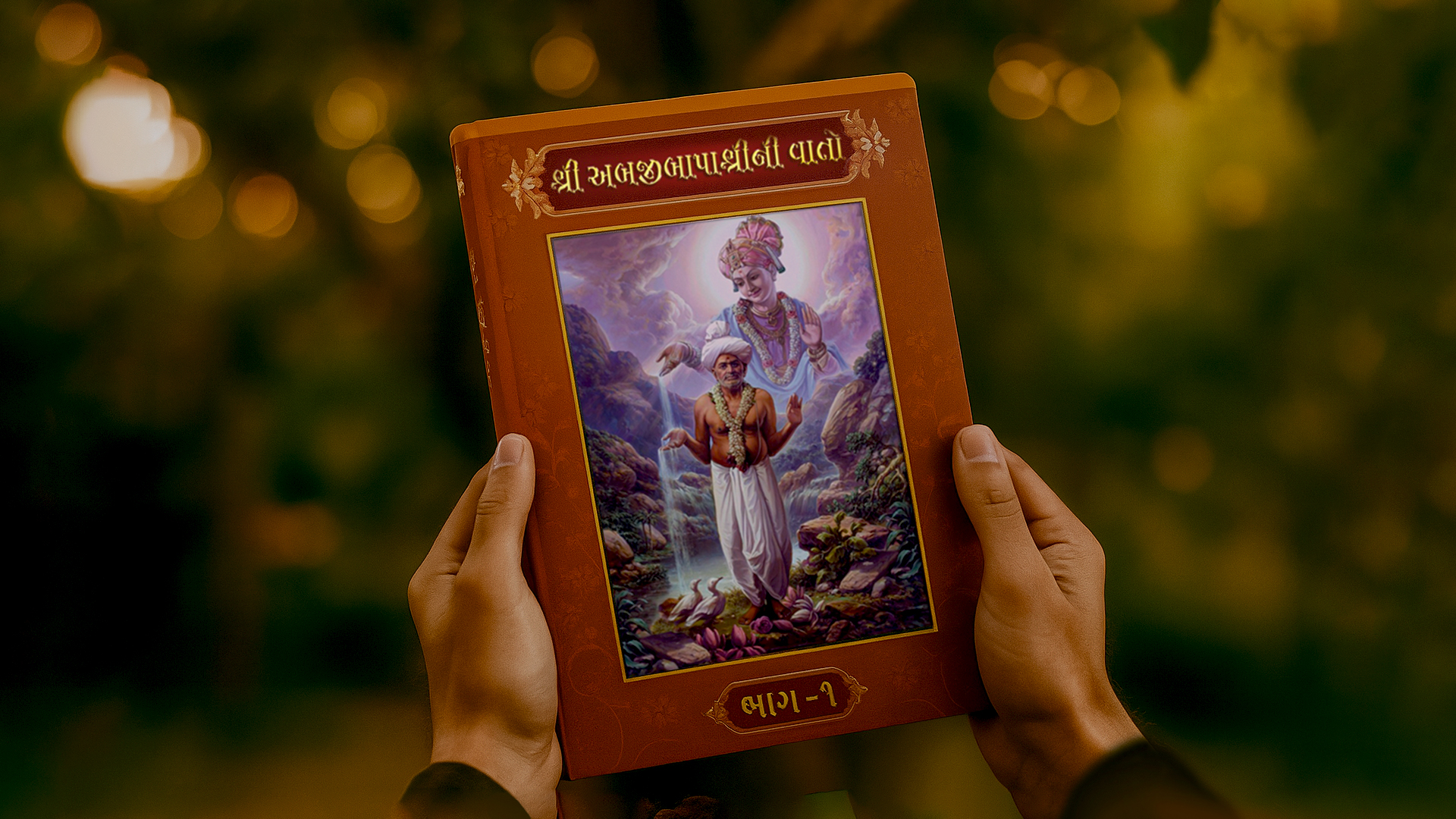 1.What are Bapashri's Vato?
Bapashri's Vato are the teachings and wisdom of Jivanpran Abjibapashri, whose divine manifestation occurred through Shriji Maharaj’s sankalp to promote and explain the supremacy of Swaminarayan Bhagwan's form and the state of Anadimukta. These two eternal principles of Swarupnishtha and status of Anadimukta were conveyed and propagated by Bapashri to the devotees.
In these discourses, Bapashri expounded on these eternal principles using the Vachanamrut as the foundation, clarifying intricate philosophical concepts. He emphasized the importance of maintaining purity in conduct and constantly guided sants and devotees towards the state of Anadimukta, so they could experience the divine bliss of the murti.
To preserve and spread these invaluable teachings, the collection of his discourses was compiled into two volumes titled "Abjibapashri's Vato." These books contain the divine flow of knowledge, guiding devotees toward eternal bliss through Shriji Maharaj’s approved eternal principles.
2. When was Bapashri's Vato written?
The writing of Bapashri's Vato began on Vaishakh Vad 1, Samvat 1962. (May 19, 1905)
3. Who compiled Bapashri's Vato?
The collection of Bapashri's Vato was compiled by the Anadimukta Sadguru Ishwarcharandasji swami.
4. How did Bapashri's Vato originate?
In Vikram Samvat 1962, at Rampur in Kutch, Muktaraj Dhanba decided to organize a parayan from Chaitra Vad 2 to Vaishakh Sud 1 and requested Bapashri to attend, saying, "Please come to this parayan and bring the Sadgurus with you." Bapashri had a letter written to the Sadgurus, saying, "Sankhyogi Dhanba of Rampur has arranged a parayan, so all of you sants, come to Kutch."
Upon receiving Bapashri's letter, the sants were delighted. Sadguru Vrundavandasji Swami, Sadguru Ishwarcharandasji Swami, and Sadguru Ghanshyamjivandasji Swami, along with other Sadgurus, celebrated the festival of Harinamvi on Chaitra Sud 9 in Ahmedabad and then proceeded to Kutch. At the parayan, Bapashri and the Sadgurus blessed everyone with their darshan and spiritual association, bringing great joy to all, including Muktaraj Dhanba and the many sants and devotees who benefited from their presence.
After the completion of the yagna-parayan, Bapashri, along with the Sadgurus and devotees, traveled to Vrushpur. On the journey, a thought consumed Sadguru Ishwarcharandasji Swami's mind: “In this current era, Bapashri continuously reveals new and endless talks about the bliss of the divine form. If we could compile Bapashri's teachings for the benefit of countless souls in the future, it would be wonderful. But how can we write without Bapashri’s permission?” With these thoughts lingering, they reached Vrushpur.
After having darshan of Maharaj, sermons and niyam chesta were conducted, then devotees leave for the home. It was midnight, and the full moon of Vaishakh Poonam shone brightly. Bapashri, too, was seated joyfully on His seat. Sadguru Swami looked for an opportunity to present his thoughts to Bapashri, thinking carefully about how to express them. But before he could say anything, Bapashri, knowing the inner thoughts of Sadguru, said, “Swami! Every year you come here and enjoy the spiritual association, listening to the discourses, engaging in questions and answers, and experiencing the divine atmosphere. Since Sadguru Nirgundasji Swami’s passing, you’ve been visiting regularly, but no record of these discourses is kept. If these discourses were recorded, they would benefit countless souls in the future.”
Sadguru Swami was overjoyed, realizing that Bapashri had spoken his very thoughts. Filled with happiness, he replied, “Bapa! I’ve always wanted to write them down, but how could I do so without your command? I was wondering how to get your permission.” Bapashri responded, “Swami! From now on, start writing. This will benefit many in the future.”
Thus, on Vaishakh Vad 1, Samvat 1962, the divine task of scribing the words of Bapashri’s began. Sadguru Swami immediately brought paper and a pen, and the collection of Bapashri’s Vato was initiated.
5. How many Vato are there in Bapashri's Vato?
Bapashri's Vato (Part 1): 251
1.What are Bapashri's Vato?
Bapashri's Vato are the teachings and wisdom of Jivanpran Abjibapashri, whose divine manifestation occurred through Shriji Maharaj’s sankalp to promote and explain the supremacy of Swaminarayan Bhagwan's form and the state of Anadimukta. These two eternal principles of Swarupnishtha and status of Anadimukta were conveyed and propagated by Bapashri to the devotees.
In these discourses, Bapashri expounded on these eternal principles using the Vachanamrut as the foundation, clarifying intricate philosophical concepts. He emphasized the importance of maintaining purity in conduct and constantly guided sants and devotees towards the state of Anadimukta, so they could experience the divine bliss of the murti.
To preserve and spread these invaluable teachings, the collection of his discourses was compiled into two volumes titled "Abjibapashri's Vato." These books contain the divine flow of knowledge, guiding devotees toward eternal bliss through Shriji Maharaj’s approved eternal principles.
2. When was Bapashri's Vato written?
The writing of Bapashri's Vato began on Vaishakh Vad 1, Samvat 1962. (May 19, 1905)
3. Who compiled Bapashri's Vato?
The collection of Bapashri's Vato was compiled by the Anadimukta Sadguru Ishwarcharandasji swami.
4. How did Bapashri's Vato originate?
In Vikram Samvat 1962, at Rampur in Kutch, Muktaraj Dhanba decided to organize a parayan from Chaitra Vad 2 to Vaishakh Sud 1 and requested Bapashri to attend, saying, "Please come to this parayan and bring the Sadgurus with you." Bapashri had a letter written to the Sadgurus, saying, "Sankhyogi Dhanba of Rampur has arranged a parayan, so all of you sants, come to Kutch."
Upon receiving Bapashri's letter, the sants were delighted. Sadguru Vrundavandasji Swami, Sadguru Ishwarcharandasji Swami, and Sadguru Ghanshyamjivandasji Swami, along with other Sadgurus, celebrated the festival of Harinamvi on Chaitra Sud 9 in Ahmedabad and then proceeded to Kutch. At the parayan, Bapashri and the Sadgurus blessed everyone with their darshan and spiritual association, bringing great joy to all, including Muktaraj Dhanba and the many sants and devotees who benefited from their presence.
After the completion of the yagna-parayan, Bapashri, along with the Sadgurus and devotees, traveled to Vrushpur. On the journey, a thought consumed Sadguru Ishwarcharandasji Swami's mind: “In this current era, Bapashri continuously reveals new and endless talks about the bliss of the divine form. If we could compile Bapashri's teachings for the benefit of countless souls in the future, it would be wonderful. But how can we write without Bapashri’s permission?” With these thoughts lingering, they reached Vrushpur.
After having darshan of Maharaj, sermons and niyam chesta were conducted, then devotees leave for the home. It was midnight, and the full moon of Vaishakh Poonam shone brightly. Bapashri, too, was seated joyfully on His seat. Sadguru Swami looked for an opportunity to present his thoughts to Bapashri, thinking carefully about how to express them. But before he could say anything, Bapashri, knowing the inner thoughts of Sadguru, said, “Swami! Every year you come here and enjoy the spiritual association, listening to the discourses, engaging in questions and answers, and experiencing the divine atmosphere. Since Sadguru Nirgundasji Swami’s passing, you’ve been visiting regularly, but no record of these discourses is kept. If these discourses were recorded, they would benefit countless souls in the future.”
Sadguru Swami was overjoyed, realizing that Bapashri had spoken his very thoughts. Filled with happiness, he replied, “Bapa! I’ve always wanted to write them down, but how could I do so without your command? I was wondering how to get your permission.” Bapashri responded, “Swami! From now on, start writing. This will benefit many in the future.”
Thus, on Vaishakh Vad 1, Samvat 1962, the divine task of scribing the words of Bapashri’s began. Sadguru Swami immediately brought paper and a pen, and the collection of Bapashri’s Vato was initiated.
5. How many Vato are there in Bapashri's Vato?
Bapashri's Vato (Part 1): 251 Bapashri's Vato (Part 2): 157